
El axolote: un tesoro natural de México
The Axolotl: A Natural Treasure of Mexico
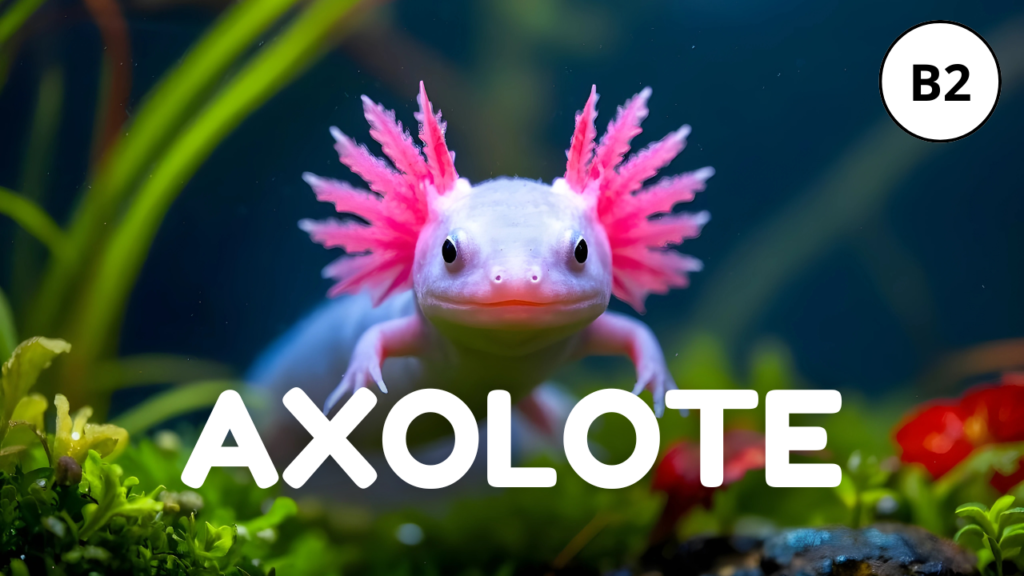
El axolote es un anfibio originario de México que vive principalmente en los canales y lagos de Xochimilco, en la Ciudad de México.
The axolotl is an amphibian native to Mexico that lives mainly in the canals and lakes of Xochimilco, in Mexico City.
Este animal es conocido por su apariencia particular y por una habilidad sorprendente: la capacidad de regenerar partes de su cuerpo, como las patas o algunos órganos.
This animal is known for its unusual appearance and for an amazing ability: the capacity to regenerate parts of its body, such as legs or some organs.
Por esta razón, el axolote ha despertado el interés de científicos de todo el mundo.
For this reason, the axolotl has attracted the interest of scientists from all over the world.
Sin embargo, el axolote se encuentra actualmente en peligro de extinción.
However, the axolotl is currently endangered.
La contaminación del agua, la urbanización y la introducción de especies invasoras han reducido considerablemente su hábitat natural.
Water pollution, urbanization, and the introduction of invasive species have significantly reduced its natural habitat.
Como consecuencia, su población ha disminuido de manera alarmante en las últimas décadas.
As a result, its population has decreased dramatically in recent decades.
Para protegerlo, se han puesto en marcha diferentes proyectos de conservación.
To protect it, different conservation projects have been launched.
Por ejemplo, existen programas de reproducción en cautiverio y campañas educativas que buscan sensibilizar a la población sobre la importancia de cuidar el medio ambiente.
For example, there are captive breeding programs and educational campaigns that aim to raise awareness about the importance of protecting the environment.
Además, algunas comunidades locales trabajan para mantener limpios los canales y preservar este ecosistema.
In addition, some local communities work to keep the canals clean and preserve this ecosystem.
Por otro lado, el axolote no solo es importante desde el punto de vista científico, sino también cultural.
On the other hand, the axolotl is not only important from a scientific point of view, but also from a cultural one.
En México, este animal es considerado un símbolo de identidad y aparece en leyendas, artesanías y expresiones artísticas.
In Mexico, this animal is considered a symbol of identity and appears in legends, handicrafts, and artistic expressions.
En conclusión, el axolote representa una parte valiosa del patrimonio natural y cultural de México.
In conclusion, the axolotl represents a valuable part of Mexico’s natural and cultural heritage.
Protegerlo es fundamental para garantizar que las futuras generaciones puedan conocer y apreciar a este animal único.
Protecting it is essential to ensure that future generations can know and appreciate this unique animal.
Spanish Key Vocabulary
- Axolote – Axolotl
- Anfibio – Amphibian
- Xochimilco – Xochimilco
- Regenerar – To regenerate
- Extinción – Extinction
- Contaminación – Pollution
- Urbanización – Urbanization
- Especies invasoras – Invasive species
- Conservación – Conservation
- Reproducción en cautiverio – Captive breeding
- Campañas educativas – Educational campaigns
- Ecosistema – Ecosystem
- Patrimonio – Heritage
- Cultura – Culture
- Símbolo – Symbol
Useful Expressions
- En peligro de extinción – Endangered / At risk of extinction
- Por esta razón – For this reason
- Tener importancia cultural – To have cultural importance
- Con el objetivo de – With the goal of / With the aim of
- De manera alarmante – Alarmingly / In an alarming way
It’s time to practice your Spanish
Now it’s time to practice what you learned from the story.
First, answer the comprehension questions to check how well you understood the story.
Then, practice your Spanish by answering a question based on the story.
Part 1
Comprehension Practice
¿Cuál es la característica más sorprendente del axolote?
¿Por qué el axolote está en peligro de extinción?
¿Qué objetivos tienen los programas de conservación del axolote?
¿Por qué el axolote también es importante culturalmente en México?
¿Qué representa el axolote según el texto?
Click the button to review your answers.
Part 2
Writing Practice
Write your answer to the question in the comments. Don’t worry about being perfect… just try!
You can also read other students’ answers, join the conversation, and practice together.
Answer the question (in Spanish) in the comments:
¿Crees que los proyectos de conservación del axolote son suficientes para proteger esta especie? ¿Se podrían tomar más medidas para preservar su hábitat y su valor cultural? ¿Qué harías tú si fueras responsable de salvar al axolote y por qué?
Do you think the conservation projects for the axolotl are enough to protect this species? Could more actions be taken to preserve its habitat and cultural value? What would you do if you were responsible for saving the axolotl, and why?
Try to write a detailed answer with at least 5–6 sentences. Include facts from the text, personal reflections, and suggestions for action.
Interesante que el axolote vive principalmente en los canales de la Ciudad de México. Es posible que viven en otros lugares pero no se ha descubierto allí? Y la posibilidad de regenerar algunos órganos me fascina. Qué extraordinario!