
Terremotos en México
Earthquakes in Mexico
México es uno de los países más afectados por terremotos debido a su ubicación geográfica sobre varias placas tectónicas, especialmente las placas de Cocos y Norteamérica.
Mexico is one of the countries most affected by earthquakes due to its geographic location on several tectonic plates, especially the Cocos and North American plates.
Los sismos son frecuentes y, a veces, pueden ser muy destructivos si ocurren cerca de zonas pobladas.
Earthquakes are frequent and can sometimes be very destructive if they occur near populated areas.
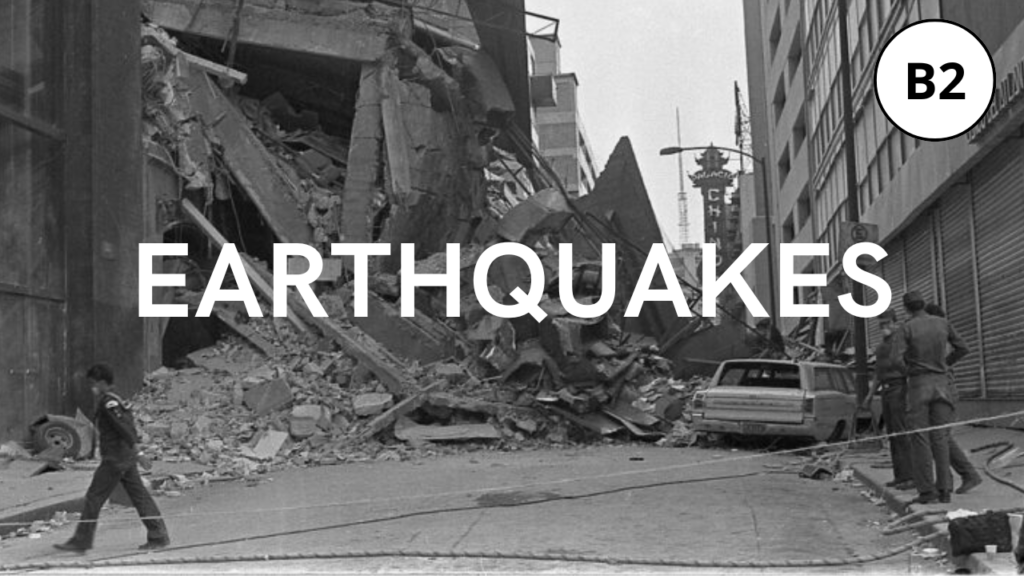
Uno de los terremotos más devastadores en la historia moderna fue el 19 de septiembre de 1985, que ocurrió a las 7:17 de la mañana con una magnitud de 8.0 en la escala de Richter.
One of the most devastating earthquakes in modern history occurred on September 19, 1985, at 7:17 a.m., with a magnitude of 8.0 on the Richter scale.
Este sismo causó graves daños en la Ciudad de México y en varios estados del centro y sur del país, y dejó miles de víctimas y viviendas destruidas.
This earthquake caused severe damage in Mexico City and in several states in central and southern Mexico, leaving thousands of victims and destroyed homes.
Décadas después, el 19 de septiembre de 2017 también se registró un terremoto importante, con magnitud de 7.1, que afectó zonas de Puebla, Morelos y la Ciudad de México.
Decades later, on September 19, 2017, another significant earthquake occurred, with a magnitude of 7.1, affecting areas of Puebla, Morelos, and Mexico City.
Este ocurrió pocas horas después de un simulacro nacional que se realiza cada año en conmemoración del sismo de 1985.
It occurred only a few hours after a national drill that is held every year in commemoration of the 1985 earthquake.
Además, hay otros sismos históricos que han marcado al país, como el 3 de junio de 1932 frente a las costas de Jalisco y Colima, con magnitud de 8.2.
Additionally, there are other historical earthquakes that have marked the country, such as the June 3, 1932 quake off the coast of Jalisco and Colima, with a magnitude of 8.2.
El impacto de estos terremotos no sólo se ve en pérdidas humanas y materiales, sino también en cómo la sociedad y las autoridades han mejorado la preparación civil, los códigos de construcción y los sistemas de alerta sísmica.
The impact of these earthquakes is not only seen in human and material losses, but also in how society and authorities have improved civil preparedness, building codes, and early warning systems.
Spanish Key Vocabulary
- terremoto / sismo / temblor – earthquake
- placa tectónica – tectonic plate
- Cocos (placa) – Cocos (plate)
- Norteamérica (placa) – North American (plate)
- magnitud – magnitude
- escala de Richter – Richter scale
- daño – damage
- víctima – victim
- vivienda – house / dwelling
- simulacro – drill / simulation
- prevención – prevention
- alerta sísmica – seismic alert
- histórico – historic
- desastre natural – natural disaster
- reconstrucción – reconstruction
Useful Expressions
- Afectado por – affected by
- Cerca de zonas pobladas – near populated areas
- Causar graves daños – to cause severe damage
- Dejar víctimas y viviendas destruidas – to leave victims and destroyed homes
- Mejorar la preparación civil – to improve civil preparedness
It’s time to practice your Spanish
Now it’s time to practice what you learned from the story.
First, answer the comprehension questions to check how well you understood the story.
Then, practice your Spanish by answering a question based on the story.
Part 1
Comprehension Practice
¿Por qué México es un país muy afectado por terremotos?
¿Qué sucedió el 19 de septiembre de 1985 y por qué fue tan importante?
¿Qué zonas se vieron afectadas por el terremoto del 19 de septiembre de 2017?
¿Qué medidas han mejorado la seguridad y preparación civil en México después de los terremotos?
¿Cuál crees que ha sido la lección más importante que México ha aprendido de estos sismos?
Click the button to review your answers.
Part 2
Writing Practice
Write your answer to the question in the comments. Don’t worry about being perfect… just try!
You can also read other students’ answers, join the conversation, and practice together.
Answer the question (in Spanish) in the comments:
¿Has experimentado un terremoto o desastre natural? ¿Qué ocurrió y qué medidas se tomaron? Describe cómo fue la experiencia y lo que aprendiste de ella.
Have you experienced an earthquake or natural disaster? What happened and what measures were taken? Describe the experience and what you learned from it.
Try to write a detailed answer with at least 5–6 sentences. Include facts, personal reflections, or lessons learned.